
From Aja's journal
Water and the courage to trust what you feel
By Aja Humm
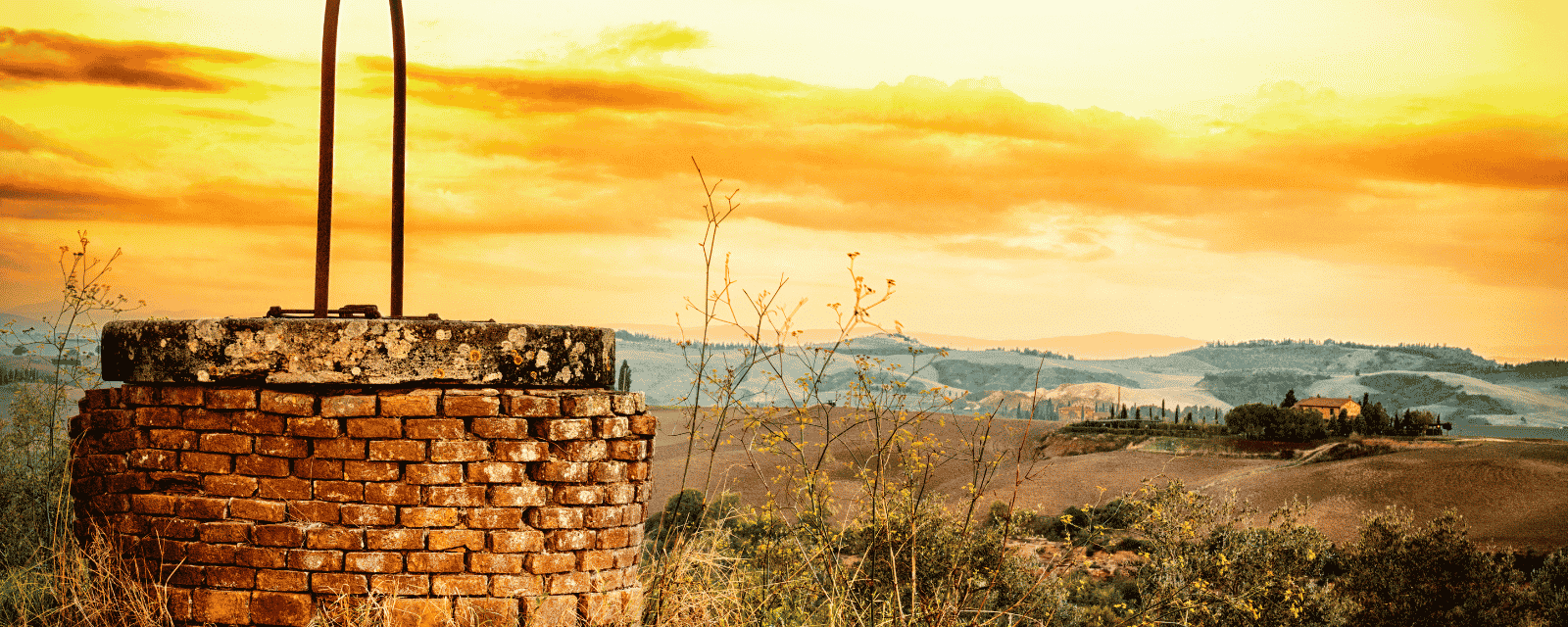
Sometimes I find it really hard to trust — or even see — my own instincts and gut feelings, even though somewhere deep down I already know what they are.
Our busy thinking, our "monkey minds" as the Buddhists like to call them, often block the wisdom of what's already there.
This is why I like to remind myself of how people out in the fields used to find water wells, long before anyone had drilling equipment or ground surveys. I've tried the technique myself, and it's utterly fascinating how it works.
It went by different names depending on where you were. Dowsing. Water-witching. Divining. But the method was the same everywhere.
A person walked slowly across a piece of land holding a forked branch, usually hazel or willow, and waited for it to dip or twist on its own. Where it moved, they started digging.
This method worked often enough that wells all over Europe were placed this way. Isn't that amazing? Including plenty right here in Norway that people still drink from today.
I once had a boyfriend who lived in the countryside near Lillehammer, and his water came from a well found exactly this way. The water was a little coloured, but I always loved the natural, unfiltered feel of it.
I love that image — someone walking slowly and attentively across a field, trying to feel something in their hands.
Here's the part I find genuinely fascinating.
The modern explanation gives the credit to the person, not the stick. Tiny unconscious muscle movements — there's a name for it, the ideomotor effect — are enough to make a held branch twitch without you meaning to do anything at all.
Those movements were often guided by real things in the landscape the diviner had picked up without ever consciously noticing them. A slight dip in the ground. A change in the vegetation. A patch of grass greener than it had any business being.
The water was there.
The stick just gave the body permission to say what it already knew.
Read that again, because it's the whole thing. The diviner wasn't guessing. They were quiet enough, slow enough, and attentive enough that something they already intuitively knew could finally surface. The stick was never the instrument. The stillness was.
And I think you're probably carrying something similar around right now.
You know the one. The decision you've been circling for months and keep almost making. The conversation you keep postponing. The way of living that stopped fitting you a while ago, and somewhere in you, you already know the answer.
You're not missing information. You've had it for a long time. 🤍
What's missing is maybe the slow walk across the field.
So let me be honest with you about what meditation actually does here, because I'm not interested in overselling it to you. It is not going to hand you an answer you don't already have, consciously or unconsciously.
It doesn't work like that, and anyone telling you otherwise is selling you a lie.
What it does is what the diviner did. It slows you down enough to see what's already in you.
That's it. That's the whole practice.
This isn't the first time I've circled this idea. I felt the same thing by the river at Brother Klaus's hermitage, and I saw it again in the cows who choose their own resting ground without ever needing to explain why. Stillness, it turns out, keeps showing up as the answer.
Send me a message and let me know what insight or clarity came to you, simply from lying or sitting down with a soundtrack in your ears for twenty-ish minutes.
With love & fresh-water clarity,
Aja
Start the slow walk
Begin with grounded breath, or return to the river that inspired this way of thinking — either is a good place to stand still for a while.