
From Aja's journal
The music that made Confucius forget the taste of food
By Aja Humm
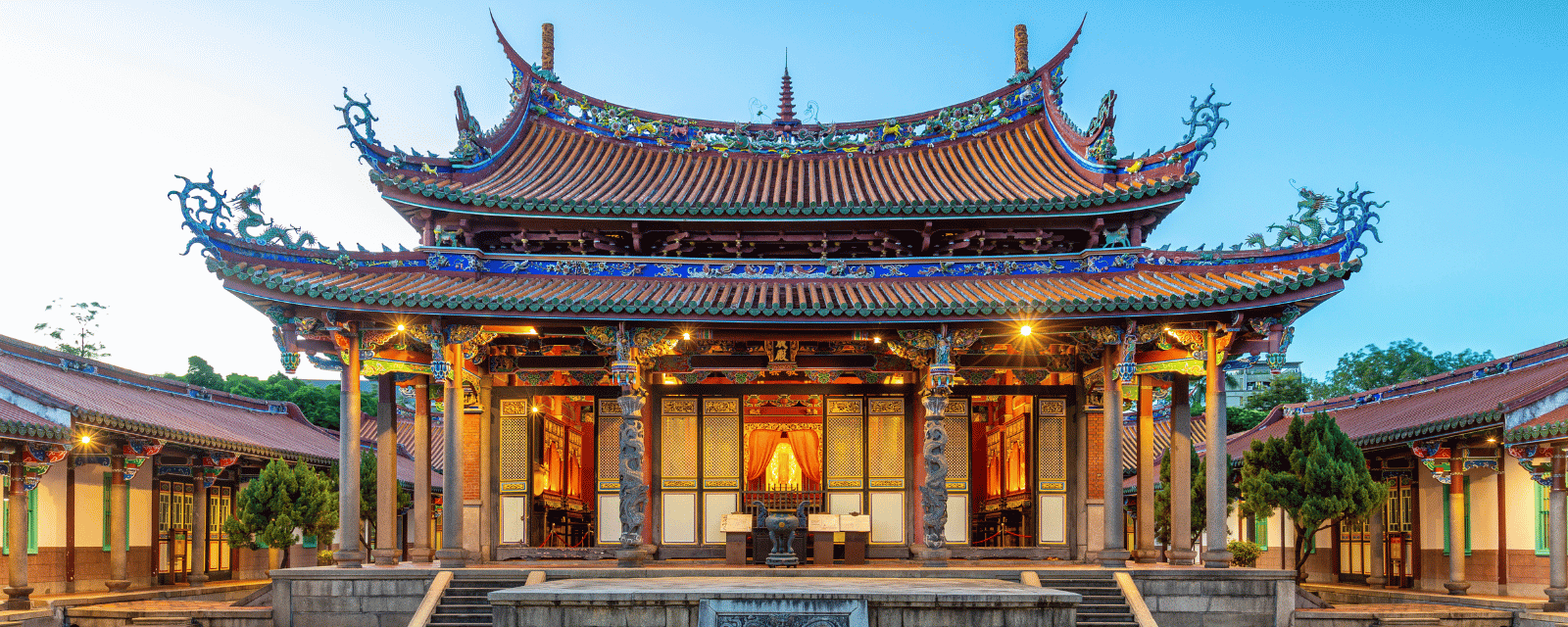
There's a story in the Analects I keep coming back to. Confucius, while travelling, heard the "Shao," the ceremonial music composed for Shun, the legendary sage-king he held up as the very picture of virtue. To Confucius it wasn't just beautiful. It was virtue made audible. He was so moved by it that, by his own account, he didn't taste meat again for three months. "I did not think," he said, "that music could have been made so excellent as this."
I loooove that story, not because it's charming, but because it describes something very real: the feeling of being changed by a piece of music, not just entertained by it. That's the feeling I wanted to build a meditation around. To bring you the transformative ancient frequencies.
Where this one comes from
For the last while I've been working with something I didn't expect to find: a full musical score for the ceremony once held in Confucius's honour, fixed by imperial decree in 1743 and documented in careful detail in a nineteenth-century study of Chinese court music: J.A. van Aalst's Chinese Music (1884).
The hymn is built in six movements: receiving the spirit, three presentations of offerings, the removal of those offerings, and finally, escorting the spirit back.
Every gesture of the dancers who once performed it is described.
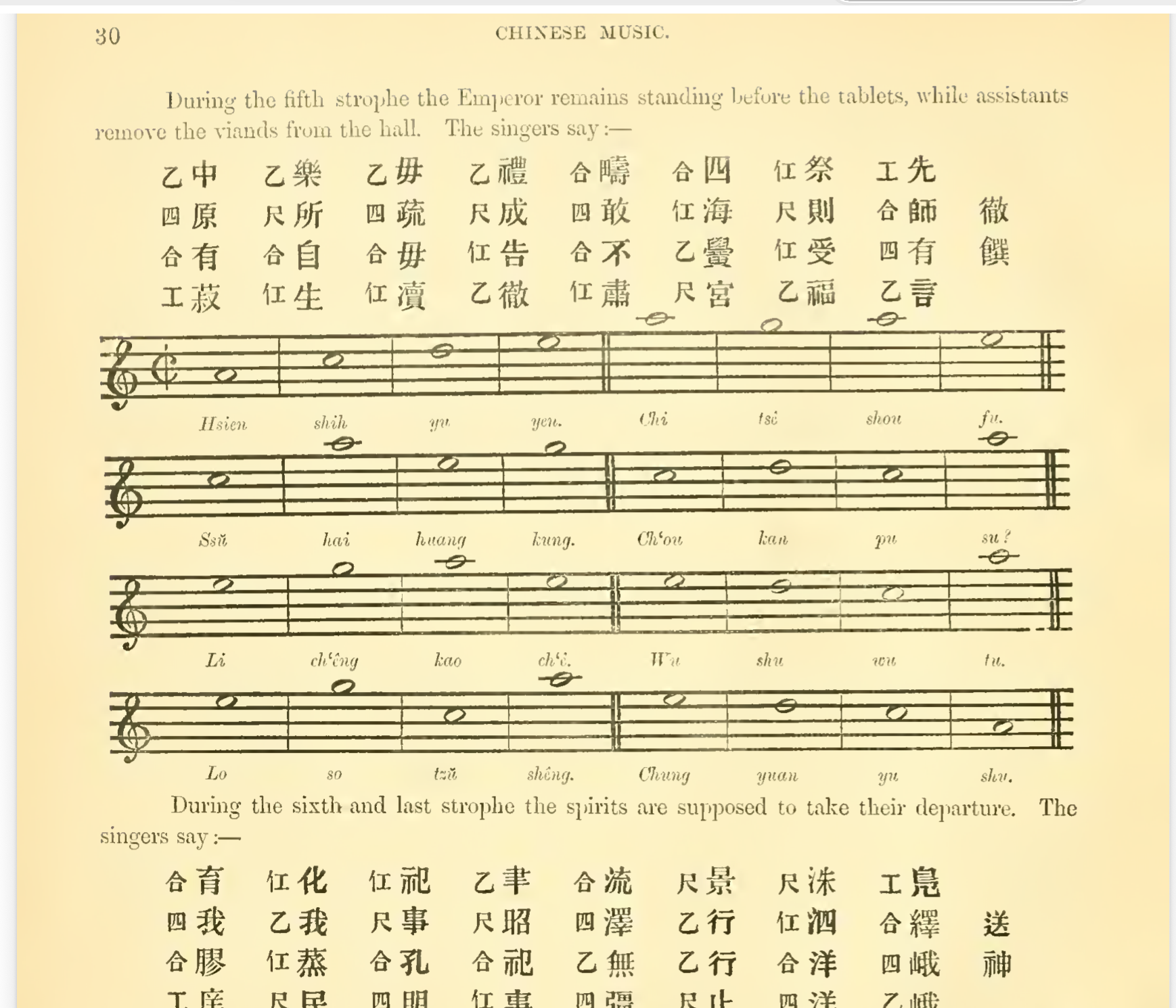
What struck me most was the instruction written into the score itself. VERY SLOW.
Two rows of singers, facing each other, each note passed forward. One sound given fully before the next was allowed to begin. Nothing rushed and nothing decorative. Just held attention.
What did I create?
I picked up my violin and recorded the piece exactly as it was written. The same notes assigned to each of the six movements, transcribed from the original score. Not an interpretation, not something inspired by it. The actual melodic line, the way it was set down.
Then I built a meditation around that same six-part structure, because it already had the shape a good meditation needs: arrival, offering, reflection, intention, release, and return. I didn't have to invent an arc. It was already there, waiting, in a ceremony that's been performed the same way for centuries. For me, that's pretty mind-blowing.
Why this one is different
MeditationMinutes has, until now, lived in two places: the wildness of Self-Confidence like a Viking, inspired by the Norwegian World Cup team and Erling, and the softness of The Healing Garden, again inspired by a beautiful client of mine.
This one is something closer to what Confucius describes in that small, strange story about forgetting the taste of food. The particular stillness of being fully met by something old and deliberate.
It's not necessarily a piece to fall asleep to, but totally fine if you do, of course! It's more like a meditation for going forward in life, setting an intention, or when you need a ten-minute transformative moment to get you onto a new track in life.
I hope it does for you a little of what the "Shao" did for him.
PS: "Ten Thousand Ages" takes its name from the ceremony's own hymn text, which calls Confucius "the teacher of ten thousand ages," the ancient way of saying an influence that outlasts any single lifetime.
With love and intention,
Aja
Ten Thousand Ages
The exact ceremonial music of a Confucian ritual, played note for note on solo violin.
Play Ten Thousand Ages